

Sustainability · 2025
In this section50 topics
- Sustainability Policy4 items
- Sustainability Goals & UN SDGs3 items
- Policy Review2 items
- Impacts on Stakeholders — Overview1 item
- Business Value Chain1 item
- Stakeholder Analysis1 item
- Environmental Policy & Guidelines3 items
- Environmental Policy Review3 items
- Energy — Plan & Guidelines2 items
- Energy — Electricity Consumption2 items
- Energy — Fuel Consumption1 item
- Energy — Targets2 items
- Energy — Performance & Outcomes1 item
- Water — Plan & Guidelines2 items
- Water — Withdrawal, Discharge & Consumption1 item
- Water — Targets2 items
- Water — Performance & Outcomes1 item
- Waste — Plan & Guidelines2 items
- Waste — Generation, Disposal & Recycling1 item
- Waste — Targets2 items
- Waste — Performance & Outcomes1 item
- GHG — Plan & Guidelines3 items
- GHG — Emissions2 items
- GHG — Emissions Verification1 item
- GHG — Principles & Standards1 item
- GHG — Targets1 item
- GHG Targets — Other Targets2 items
- GHG — Performance & Outcomes2 items
- Environmental Legal Incidents1 item
- Social Sustainability — Overview1 item
- Social Policy & Guidelines3 items
- Social Policy Review3 items
- Human Rights Due Diligence1 item
- Employees — Plan & Guidelines3 items
- Employees — Workforce1 item
- Employees — Remuneration & Provident Fund1 item
- Employees — Training & Development1 item
- Employees — Occupational Health & Safety1 item
- Employees — Labour Relations1 item
- Employees — Employee Representation1 item
- Employees — Targets2 items
- Employees — Performance & Outcomes2 items
- Customers — Plan & Guidelines3 items
- Customers — Satisfaction Results1 item
- Customers — Targets1 item
- Customers — Performance & Outcomes2 items
- Community & Social — Plan & Guidelines3 items
- Community & Social — Targets1 item
- Community & Social — Performance & Outcomes2 items
- Law Violation Incidents1 item
Sustainability Policy
Has a Sustainability Policy
Yes
Policy Description
The company is a leading integrated distributor of veterinary medicine, feed additives, feed ingredients, complete feed, and diagnostic equipment for livestock and pets in Thailand. We recognize that access to a good environment and a livable society is a human right that everyone deserves. Therefore, we are committed to sourcing high-quality, nutritious products that minimize pollution at fair prices to enhance the quality of life for consumers.
The company has grown from an animal health product and feed additive distributor in 2004. It has been committed to developing its products, personnel, and organization, while continuously seeking new business opportunities with innovation. Today, the company is a leading integrated distributor of livestock and pet products. It has also become a manufacturer of innovative feed additives through joint research and development with the National Science and Technology Development Agency (NSTDA). Currently, the company has approximately 200 employees and has expanded its business to several countries across the ASEAN region.
The company's ability to grow steadily and overcome various crises stems from the management's business vision and the company's commitment to quality growth. It conducts business based on good corporate governance principles, coupled with social responsibility, recognizing the importance of sustainable growth. This approach aims to create stable employment for employees, maximize benefits for partners, customers, and shareholders, and provide assistance to surrounding communities. It also focuses on developing professional knowledge, promoting responsible business practices, and supporting innovation to strengthen the feed and agricultural industries for collective growth. Consequently, during times of crisis, the company receives support from customers, the solidarity of its employees, and the backing of its partners, enabling it to overcome various challenges.
Furthermore, to achieve sustainable growth, the company operates under the ESG principles to establish a strong business foundation and grow in tandem with social and environmental responsibility. The company has established a sustainability policy and appointed a sustainability working group on November 30, 2022. It has also fostered innovation to drive business and promote good governance and international standards throughout the supply chain to generate continuous business growth. The company strives to control the social and environmental impacts arising from its operations, including those within its supply chain, to prevent them from escalating. Sustainable business growth can be achieved when people in society have a good quality of life and live in a clean, safe, and healthy environment.
Policy Document Link
https://www.bis-group.com/th/about/sustainability
Page Number in Report
1-4
Sustainability Goals & UN SDGs
Has Sustainability Goals
Yes
Goals Description
The Company understands the challenges that the Company and the world are facing, both economically, socially, and environmentally, including the urgent need for all sectors to work together to solve problems such as access to clean and hygienic food with nutrition, pollution problems that affect the quality of life of the community, including risks arising from climate change. The Company therefore attaches importance to sustainable development by integrating the United Nations Sustainable Development Goals (SDGs) into the Company's operational strategies through innovation and technology-driven efficiency and good governance. The Company is committed to being a company that grows sustainably, does not create negative impacts, and is an organization that is responsible for the impacts of its operations and throughout its value chain. Under the Company's long-term operations, it aims to meet all 17 Sustainable Development Goals. In 2025-2029, the Company focuses on operations to respond to 4 goals:
UN Sustainable Development Goals
| SDG Goal |
|---|
| Goal 3 Good Health and Well-being |
| Goal 3 Good Health and Well-being |
| Goal 7 Affordable and Clean Energy |
| Goal 7 Affordable and Clean Energy |
| Goal 12 Responsible Consumption and Production |
| Goal 12 Responsible Consumption and Production |
| Goal 13 Climate Action |
| Goal 13 Climate Action |
Policy Review
Policy Reviewed This Year
No
Policy Changed This Year
No
Impacts on Stakeholders — Overview
Introduction
1. Raw Material Procurement
The company sources, imports products, and raw materials used in production by carefully selecting suppliers. The selection process prioritizes reputable and internationally recognized suppliers who offer high-quality products that have passed rigorous selection criteria, ensuring their suitability and benefits for animal feed production. These products must be approved or registered as animal feed by the Department of Livestock Development, originating from factories that meet established standards. Furthermore, the products must have undergone proper and complete registration by the manufacturers, with thorough consideration given to quality, efficacy, and safety, adhering to the evaluation guidelines set by regulatory authorities.
2. Production Process
In terms of product manufacturing, the company selects manufacturing plants with high quality and manufacturing standards that have received various certifications, such as ISO, Good Manufacturing Practice (GMP), Hazard Analysis and Critical Control Point (HACCP), or other equivalent or higher standards. These factories possess expertise and adhere to production standards to deliver products that meet the company's required standards and specifications.
The company has established its own factory for product manufacturing. The entire production process is controlled by automated and semi-automated systems, managed and operated by computers. Additionally, the company implements quality control and inspection measures to ensure that all products from its production process maintain consistent quality and standards. The company's factory is certified with Good Manufacturing Practice (GMP), Hazard Analysis and Critical Control Point (HACCP), and FAMI-QS standards.
3. Product and Service Distribution
The company provides both domestic and international distribution channels with standardized distribution methods to ensure that customers and consumers receive quality products in a timely manner.
The company is certified by the Food and Drug Administration for its compliance with Good Distribution Practice (GDP). GDP refers to the guidelines for good practices in pharmaceutical distribution, encompassing manufacturers, importers, points of sale, and authorized distributors of pharmaceutical products. Its purpose is to ensure the safety and quality of pharmaceutical products throughout the distribution chain. This guideline holds significant importance for the pharmaceutical industry, as adherence to GDP demonstrates a commitment to quality and good practices throughout the entire pharmaceutical distribution supply chain.
4. Marketing and Sales
- Selecting products for distribution to create a clear differentiation from competitors in terms of quality and price, building credibility, and meeting customer needs.
- Promoting and supporting academic services to meet customer needs and maximize their benefits.
- The company continuously monitors and analyzes market conditions, researches, and develops products from raw materials sourced both domestically and internationally. This process leverages the expertise of researchers and professors from leading universities, taking into account the best interests of customers, animal welfare, and end consumers.
- Collaborating with business partners to leverage resources and capabilities for developing competitive advantages, by partnering with reputable companies that are well-known and trusted by customers.
- Having experienced veterinarian executives with over 20 years of experience in sales and marketing of animal health products.
Business Value Chain
Value Chain Description
The Company conducts its business by giving importance to and considering all stakeholder groups and strives to manage the sustainability of activities throughout the value chain of the business from upstream to downstream. The main and supporting activities of the value chain are as follows:
Assessment of the Importance of the Company's Stakeholders
Economic and Governance Dimension
Sustainable Value Chain : Developing and increasing the proportion of partners who have products and services that take into account social and environmental impacts, including supporting supply chain management that reduces social and environmental impacts throughout the process.
Social Dimension
Product and Service Responsibility : Developing a system for receiving complaints or questionnaires and evaluating the results to improve service provision.
Human Rights : Promoting and being open to recruiting qualified and diverse personnel and not creating limitations in being a part of the organization.
Environmental Dimension
Sustainable Products and Services : Promoting and providing knowledge about products that help reduce environmental impacts to customers who receive services and increasing the proportion of sales of products that help reduce environmental impacts.
Stakeholder Analysis
Stakeholder Analysis
| Stakeholder Type | Stakeholders | Stakeholder Expectations | Response to Expectations | Communication Activities |
|---|---|---|---|---|
| External stakeholders | 2904 · Description: Investors or investment institutions · 2913 · Description: Shareholders | • Enhance shareholder value
• Generate strong financial performance and sustainable business growth
• Ensure transparent disclosure
• Treat all shareholders fairly
• Operate under good corporate governance principles | • Corporate management and development for sustainable growth
• Comprehensive disclosure of company information on the website, as well as through various company documents.
• Holding an Annual General Meeting of Shareholders to provide an opportunity for all stakeholder groups to meet and exchange ideas.
• Dividend payments are made with consideration of various factors to maximize benefits for all stakeholders. | 2939 · Description: Press Release · 2941 · Description: Online Communication · 2944 · Description: Annual General Meeting (AGM) |
| Internal stakeholders | 2921 · Description: Employees | • Treat all employees equally
• Provide appropriate compensation no less than the minimum wage.
• Prioritize the continuous development of employee skills, knowledge, abilities, and potential. | • Treat all employees fairly and equitably, respecting human rights.
• Organize training, seminars, and workshops, providing equal opportunities for all employees.
• Communicate information through email and Intranet systems to ensure that all employees are fully informed.
• Establish appropriate career path planning. | 2941 · Description: Online Communication · 2943 · Description: External Meeting · 2946 · Description: Employee Engagement Survey · 2948 · Description: Training / Seminar |
| External stakeholders | 2899 · Description: Suppliers | • Vendor selection process is based on fair competition with equal information provided to all vendors.
• Adherence to commercial terms and conditions.
• Anticorruption practices. | • Selection of suppliers with fairness under the criteria for evaluation and selection of suppliers
• Establishing a monitoring system to ensure compliance with the terms and conditions of the contract
• Preventing fraud and misconduct at all stages of the procurement process | 2945 · Description: Complaint Reception |
| External stakeholders | 2923 · Description: Customers | • Fair pricing
• Quality and service that meet customer needs
• Channels for customers to provide feedback and complaints
• Customer data protection | • Maintaining the quality and standards of products and services, including responding to customer needs as comprehensively as possible.
• Providing channels for customers within the company group to report inappropriate products and services, as well as evaluate the company's services.
• Maintaining customer confidentiality and not using it for personal gain or by related parties inappropriately, in accordance with the PDPA policy. | 2943 · Description: External Meeting · 2945 · Description: Complaint Reception · 2947 · Description: Satisfaction Survey · 2948 · Description: Training / Seminar |
| External stakeholders | 2894 · Description: Creditor | • Strict compliance with conditions and agreements
• Equal treatment of creditors
• Timely debt repayment | • Disclose information transparently and reliably.
• Strictly comply with conditions and agreements.
• Settle debts within the specified timeframe.
• Safeguard information and confidentiality in accordance with PDPA policies. | 2943 · Description: External Meeting · 2945 · Description: Complaint Reception |
| External stakeholders | 2898 · Description: Competitors | • Adherence to fair competition practices
• Respect for intellectual property rights
• Compliance with relevant laws | • Refrain from damaging the reputation of competitors.
• Adhere to good competitive practices, supporting and promoting free and fair competition.
• Avoid infringing upon copyrights or intellectual property rights. | 2945 · Description: Complaint Reception |
| External stakeholders | 2902 · Description: Community · 2928 · Description: Society | - Company website
- Community and social engagement
- Telephone and email
- Complaint channels | - Prioritize and emphasize safety for society, the environment, and the well-being of individuals involved in business operations.
- Encourage employees to be aware of and responsible for environmental and social issues.
- Provide environmentally friendly products and services.
- Participate in activities that contribute to the creation and preservation of the environment and society.
- Strictly comply with relevant laws and regulations.
- Respect human rights and freedom of expression, ensuring equal treatment for all. | 2940 · Description: Social Event · 2941 · Description: Online Communication · 2945 · Description: Complaint Reception · 2948 · Description: Training / Seminar |
Environmental Policy & Guidelines
Has an Environmental Policy
Yes
Policy Description
The company prioritizes resource and energy conservation, efficient waste management, and promotes the use of environmentally friendly products to enhance the standard of excellence in management following the sustainable development policy alongside the environment and society.
Environmental Guidelines
| Guideline |
|---|
| Electricity Management |
| Fuel Management |
| Waste Management |
| Greenhouse Gas and Climate Change Management |
Environmental Policy Review
Policy Reviewed This Year
Yes
Review Details
In 2025, the Company made no changes to its policies or practices and continued to promote environmental awareness among its employees.
Policies & Guidelines Changed
| Change |
|---|
| Electricity Management |
| Water Management |
Energy — Plan & Guidelines
Has an Energy Management Plan
Yes
Plan Description
The company will establish energy management policies and targets, analyze current energy consumption, improve efficiency by using energy-saving technologies, and reduce waste. Additionally, the company will raise awareness and encourage employee participation, as well as continuously monitor the results of operations to adjust the plan to suit the current situation.
Energy — Electricity Consumption
Introduction
Efficient Energy Use
Goal: The company recognizes the importance of efficient energy management.
The company encourages all departments to conduct activities by maximizing energy use. The goal is to develop and improve energy efficiency. This will be done by collecting energy consumption data and operational results to analyze the company's energy efficiency.
The company campaigns and raises awareness of the importance of environmental quality, both in terms of attitude and awareness of efficient energy use within the organization. There are measures for efficient energy use, such as changing light bulbs to energy-saving ones, turning off the lights during lunch breaks, unplugging electrical appliances after use, and maintaining machinery for efficiency.
Electricity Consumption
| Metric | Current Year | Previous Year | Two Years Ago |
|---|---|---|---|
| Total electricity consumption within the organization (Kilowatt-Hours) | 121,248 | 132,577 | 128,204 |
| Electricity purchased for consumption from non-renewable energy sources (Kilowatt-Hours) | |||
| Electricity purchased or generated for consumption from renewable energy sources (Kilowatt-Hours) |
Energy — Fuel Consumption
Fuel Consumption
| Metric |
|---|
| Crude oil (Barrels) |
| Coal (Metric tonnes) |
| Jet fuel (Litres) |
| Diesel (Litres) |
| Gasoline (Litres) |
| Fuel oil (Litres) |
| Natural gas (Standard cubic feet) |
| LPG (Kilograms) |
| Steam (Metric tonnes) |
Energy — Targets
Has Set Targets
Yes
Targets
| Target | Base Year | Base Year Value | Target Year | Target Year Value | Target Change (%) | Unit |
|---|---|---|---|---|---|---|
| Reduction of electricity purchased for consumption | 2,024 | 439,274.05 | 2,027 | 8,785.48 | 2 | Kilowatt-hour |
Energy — Performance & Outcomes
Has Performance Results
No
Water — Plan & Guidelines
Has a Water Management Plan
Yes
Plan Description
Objectives : Water Management: The Company and its subsidiaries focus on efficient water management as follows:
• Raise awareness and instill consciousness about water conservation.
• Use only necessary amounts of water and reduce water consumption.
• Inspect the system and piping equipment for leaks to prevent water loss.
Water — Withdrawal, Discharge & Consumption
Water Withdrawal, Discharge & Consumption
| Metric | Current Year | Previous Year | Two Years Ago |
|---|---|---|---|
| Total water withdrawal (Cubic meters) | |||
| Total water withdrawal by third-party water (Cubic meters) | |||
| Total water withdrawal by surface water (Cubic meters) | |||
| Total water withdrawal by groundwater (Cubic meters) | |||
| Total water withdrawal by seawater (Cubic meters) | |||
| Total water withdrawal by produced water (Cubic meters) | |||
| Percentage of wastewater treated before discharge (%) | |||
| Total water discharge (Cubic meters) | |||
| Total water discharge to third-party water (Cubic meters) | |||
| Total water discharge to surface water (Cubic meters) | |||
| Total water discharge to groundwater (Cubic meters) | |||
| Total water discharge to seawater (Cubic meters) | |||
| Total water consumption (Cubic meters) | 761 | 823 | 837 |
| Recycled water (Cubic meters) |
Water — Targets
Has Set Targets
Yes
Targets
| Target | Base Year | Base Year Value | Target Year | Target Year Value | Target Change (%) | Unit |
|---|---|---|---|---|---|---|
| Reduction of water withdrawal | 2,024 | 869 | 2,027 | 43.45 | 5 | Cubic meters |
Water — Performance & Outcomes
Has Performance Results
No
Waste — Plan & Guidelines
Has a Waste Management Plan
Yes
Plan Description
Waste and Unused Materials Management
Objective: To promote waste management and reduce waste according to the 3Rs concept.
The company has a policy to manage waste and byproducts from business operations according to the 3Rs principle, which are:
• Waste reduction by reducing usage (Reduce), such as using email for receiving send information via soft files to reduce paper usage. Campaign for and support the use of cloth bags to reduce plastic bag usage, both within the organization and in daily life.
• Reuse of waste (Reuse), such as circulating documents instead of making individual copies for everyone. When printing, make double-sided copies.
• Recycle waste by campaigning for the separation of recyclable waste that can be returned and recirculated into the production process of each type.
Waste — Generation, Disposal & Recycling
Waste Generation, Disposal & Recycling
| Metric |
|---|
| Total waste generated (Kilograms) |
| Non-hazardous waste (Kilograms) |
| Non-hazardous waste - Landfilling (Kilograms) |
| Non-hazardous waste - Incineration (with energy recovery) (Kilograms) |
| Non-hazardous waste - Incineration (without energy recovery) (Kilograms) |
| Non-hazardous waste - Other disposal operations (Kilograms) |
| Hazardous waste (Kilograms) |
| Hazardous waste - Landfilling (Kilograms) |
| Hazardous waste - Incineration (with energy recovery) (Kilograms) |
| Hazardous waste - Incineration (without energy recovery) (Kilograms) |
| Hazardous waste - Other disposal operations (Kilograms) |
| Total reused/recycled waste (Kilograms) |
| Reused/Recycled non-hazardous waste (Kilograms) |
| Reused non-hazardous waste (Kilograms) |
| Recycled non-hazardous waste (Kilograms) |
| Reused/Recycled hazardous waste (Kilograms) |
| Reused hazardous waste (Kilograms) |
| Recycled hazardous waste (Kilograms) |
Waste — Targets
Has Set Targets
Yes
Targets
| Waste Type | Disposal Approach | Target | Base Year | Base Year Value | Target Year | Target Year Value | Target Change (%) | Unit |
|---|---|---|---|---|---|---|---|---|
| Non-hazardous waste | 2758 · Description: Reuse · 2763 · Other name: Waste sorting · Description: Other | Reduce waste volume | 2,024 | 49,538.96 | 2,027 | 2,476.95 | 5 | Kilograms |
Waste — Performance & Outcomes
Has Performance Results
No
GHG — Plan & Guidelines
Has a GHG Management Plan
Yes
Plan Description
The Company recognizes the importance and necessity of participating in climate change mitigation, including supporting and promoting greenhouse gas management for the benefit of the organization, society, and the country's environment. To respond to Thailand's policy in reducing greenhouse gases in line with state policies and agreements under the United Nations Framework Convention on Climate Change (UNFCCC), the Company has guidelines for internal practices to avoid negative impacts on natural resources and the environment.
The Company encourages customers to participate in addressing climate change by offering services and products that help mitigate climate change impacts, such as microorganisms for treating wastewater from livestock farms before releasing it into public water sources and promoting the application of Solar Roof in livestock farms. The Company has instilled a culture of energy conservation and resource optimization among its personnel by considering environmental preservation and reducing energy consumption, which is considered an indirect greenhouse gas emission.
Plan Document Link
https://www.bis-group.com/storage/document/cg/summary-of-the-organizational-greenhouse-gas-report-th.pdf
GHG — Emissions
Introduction
The results of the greenhouse gas emissions and removals report show that Scope 3 activities, the acquisition of purchased and sold goods and products, are activities with significant greenhouse gas emissions. This activity generates the main revenue for the organization.
In addition, Scope 3 activities that are less significant include the use of raw materials in the production process, paper usage, tap water usage, ink usage from photocopiers owned by the organization, the use of messenger services for document delivery, the use of fire drill services, and the transportation of goods and products out of the organization. In order not to neglect sources of greenhouse gas emissions that may have the potential to reduce emissions and are sources that the organization can access data on, the organization can consider ways to manage these activities in the future.
The organization can promote cooperation from all departments in carrying out public relations campaigns to raise awareness and understanding in managing activities that are sources of greenhouse gas emissions of the organization, including setting targets to reduce greenhouse gas emissions from activities that are sources of greenhouse gas emissions of the organization.
Water Management
Water management and water conservation campaigns. The organization can reduce water consumption by following these methods:
- Use water sparingly. Regularly check for water leaks to reduce water loss.
- Do not use the toilet as a place to dispose of food scraps, paper, or any chemicals, as this will result in water loss from flushing the toilet to remove these items down the drain.
- Encourage employees to save water by placing symbols or signs to help reduce water consumption in areas such as restrooms and handwashing areas.
Paper and Ink Management
- Reuse paper and use double-sided printing.
- In the office, use document forwarding instead of making multiple copies to save paper and ink.
- Use electronic means to disseminate information and news instead of paper-based communication.
- Issue electronic bills and receipts.
- Separate paper waste from other types of waste and send it for recycling.
Green Procurement
- Select products, goods, and services by taking into account social, economic, and environmental factors in conjunction with price, quality, and delivery of goods and services in the organization's procurement process and steps. This not only provides financial value in terms of generating profits for the organization but also creates social and economic benefits and reduces negative impacts on the environment.
GHG Emissions
| Metric | Current Year | Previous Year | Two Years Ago |
|---|---|---|---|
| Total GHG emissions (Metric tonnes of carbon dioxide equivalent) | 0 | 21,818 | 0 |
| Total greenhouse gas emissions 1 (Metric tonnes of carbon dioxide equivalent) | 0 | 471 | 0 |
| Total greenhouse gas emissions 2 (Metric tonnes of carbon dioxide equivalent) | 0 | 220 | 0 |
| Total greenhouse gas emissions 3 (Metric tonnes of carbon dioxide equivalent) | 0 | 21,127 | 0 |
GHG — Emissions Verification
Emissions Verified by a Third Party
No
GHG — Principles & Standards
Principles & Standards Applied
| Standard |
|---|
| 2671 |
GHG — Targets
Has Set GHG Targets
Yes
GHG Targets — Other Targets
Introduction
The Company is committed to conducting business sustainably, responsibly towards society and the environment, recognizing its participation in being a part of addressing climate change, including supporting and promoting the management of greenhouse gases of the organization. Following the policy of the state and the United Nations Framework Convention on Climate Change (UNFCCC), the Company has assessed the Carbon Footprint for Organization (CFO) to understand the amount of greenhouse gas emissions and absorption of the organization, which will lead to defining guidelines for management to reduce greenhouse gas emissions of the organization effectively in the future. Therefore, there is a policy for greenhouse gas management as follows:
1. Raise awareness, enhance knowledge and understanding, and communicate about climate change to executives, employees, business partners, and stakeholders involved in greenhouse gas emissions from operations.
2. Promote and campaign for waste collection for reuse.
3. Modify processes and equipment to ensure high efficiency.
4. Prepare and review the organization's greenhouse gas emissions report, covering the company's scope of operations, and disclose such information in the company's annual report.
5. Create a process for employee participation in the organization to reduce the organization's carbon footprint, track academic information and news updates on climate change, especially risks that may affect the organization and stakeholders.
Other GHG Targets
| Emission Scope | Base Year | Base Year Emissions | Near-term Target Year | Near-term Target Value | Near-term Target Change (%) | Long-term Target Year | Long-term Target Value | Long-term Target Change (%) | Target Year | Target Year Emissions | Target Change (%) | Unit |
|---|---|---|---|---|---|---|---|---|---|---|---|---|
| 2717 | 2,024 | 471 | 2,027 | 9.42 | 2 | 2,032 | 23.55 | 5 | 2,027 | 9.42 | 2 | Metric tonnes of carbon dioxide equivalent |
| 2718 | 2,024 | 220 | 2,027 | 4.4 | 2 | 2,032 | 11 | 5 | 2,027 | 4.4 | 2 | Metric tonnes of carbon dioxide equivalent |
| 2719 | 2,024 | 21,127 | 2,027 | 633.81 | 3 | 2,032 | 1,056.35 | 5 | 2,027 | 633.81 | 3 | Metric tonnes of carbon dioxide equivalent |
GHG — Performance & Outcomes
Has Performance Results
Yes
Performance Description
Bioscience Animal Health Public Company Limited has assessed the organization's carbon footprint, and the report covers information from subsidiaries, including 1. Bioscience Animal Health Public Company Limited (BIS) 1.1 Head Office Building and Factory and Warehouse 2. Feed & Ingredients Technological Hub Company Limited (FAITH) 3. Pro Test Kit Company Limited (PTK) 4. PEDEX Company Limited (PEDEX) 5. Nutrition Improvement Company Limited (NIC) and 6. Special Ingredient Services Company Limited (SIS), which prepared the report according to the "Regulations on Calculating and Reporting Corporate Carbon Footprints by the Greenhouse Gas Management Organization (Public Organization), 8th Edition (6th Revision, July 2022)." The monitoring period is from October 1, 2023 to September 30, 2024. As this is the first year of greenhouse gas emissions assessment, it was decided to assess activities related to 3 scopes, which are:
1. Greenhouse gas emissions from direct business processes (Scope 1) consist of fuel use for company machinery and vehicles, refrigerant leaks, CO2 fire extinguisher leaks, and methane leaks from the septic tank system.
2. Greenhouse gas emissions from indirect business processes from energy use (Scope 2) consist of electricity use.
3. Greenhouse gas emissions from other indirect business processes (Scope 3) consist of the use of raw materials in the production process, the acquisition of purchased and sold goods and products, paper use, tap water use, printing ink use from company-owned copiers, use of messenger services for document delivery, use of fire drill services, and the transportation of goods and products out of the organization.
The report has been reviewed by an ISO-certified auditing body. The Industrial Development Foundation references the information according to the statement issued on March 4, 2025, and the company is in the process of registering for corporate carbon footprint certification with the Greenhouse Gas Management Organization No. 2/2025, with greenhouse gas emissions of 21,818 tons of carbon dioxide equivalent per year (TonCO2e/year). Scope 1 has greenhouse gas emissions of 471, Scope 2 has greenhouse gas emissions of 220, and Scope 3 has greenhouse gas emissions of 21,127.
The Company designated 2024 as the base year for collecting greenhouse gas (GHG) emissions data and set a target to continuously collect such data over a two-year period to serve as a baseline for defining approaches and measures to reduce GHG emissions in 2025. Accordingly, the Company has developed concrete plans and established specific measures to reduce greenhouse gas emissions. In 2026, the Company plans to continue implementing the approaches and measures formulated in 2025, such as the installation of solar rooftop systems and the policy to promote the use of electric vehicles (EVs). In addition, the Company plans to collect and review the GHG emissions base year again in 2026 to ensure that the data remains appropriate, up to date, and aligned with the Company’s operations at each stage.
Environmental Legal Incidents
Legal Violation Incidents
| Metric | Current Year | Previous Year | Two Years Ago |
|---|---|---|---|
| Number of cases or incidents of legal violations or negative environmental impact (cases) | 0 | 0 | 0 |
Employees — Plan & Guidelines
Has an Employee Management Plan
Yes
Plan Description
Recruitment and placement of personnel, Human Resources
The company has a policy to manage its workforce to suit the organizational structure and support business expansion (workforce planning). It establishes a systematic recruitment and selection process, from hiring to employee placement, adhering to principles of equality, transparency, and non-discrimination. This considers the suitability of knowledge, abilities, and experience to align with the organization's needs at various times. The recruitment process is designed to be standardized, clear, includes personality and attitude assessment tools before interviews, and can select high-potential personnel to support long-term business growth. The consideration for hiring and placing employees will primarily take into account qualifications, experience, abilities relevant to the position, as well as a positive attitude, integrity, and suitability for the organizational culture.
Individual performance evaluation
The company places importance on performance management for personnel at all levels to ensure that the organization's operations align with its vision, mission, and defined strategic goals. The company has developed and implemented a Performance Management System (PMS) as a primary tool for systematically, transparently, and fairly setting, monitoring, and evaluating performance. The company has adopted the Balanced Scorecard framework as a basis for cascading goals from the corporate level (Corporate KPIs) to the departmental level (Department KPIs) and individual level (Individual KPIs), enabling employees at all levels to understand their roles and responsibilities in driving the organization towards common goals. This ensures that performance management is balanced, covering both business outcomes and long-term organizational development. The indicators are designed to align with the organization's strategy across four main dimensions, namely:
1. Financial Perspective: Focuses on generating returns and financial stability for the organization, such as revenue, profit, resource utilization efficiency, and cost control, to support the company's sustainable growth.
2. Customer Perspective: Aims to build customer satisfaction, trust, and good relationships with customers by defining indicators that reflect service quality, punctuality, and responsiveness to customer needs.
3. Internal Process Perspective: Aims to enhance the efficiency and quality of internal work processes through improving workflows, risk management, and corporate governance, to ensure operations are efficient, transparent, and auditable.
4. Learning & Growth Perspective: Aims to develop personnel potential, technology, and organizational culture, emphasizing the development of employee skills, capabilities, engagement, and the creation of an environment conducive to learning and innovation. Structure of the Performance Indicator System (KPI)
The company defines Key Performance Indicators (KPIs) across all organizational levels to create a link from strategic goals to actual operations, including:
Corporate KPIs: Organizational-level indicators that reflect overall strategic success, covering financial, customer, internal process, and organizational development perspectives. C-Level executives are regularly involved in their definition and review.
Department KPIs: Department-level indicators derived from Corporate KPIs to align with the roles, duties, and missions of each unit, ensuring that supervisors and managers of all departments participate in driving the organization towards common goals.
Individual KPIs: Individual indicators defined by job characteristics, responsibilities, and position levels, linked to Department KPIs and Corporate KPIs, to ensure all employees in the organization understand their role in the organization's success.
Performance monitoring and evaluation process
The company continuously monitors and evaluates performance throughout the year through key processes, including:
Joint goal and KPI setting between supervisors and employees
Mid-Year Review and Feedback under the concept of Continuous Communication (Conversation, Feedback, Recognition)
Annual performance evaluation, considering both KPI results and work behavior based on the organization's defined G.R.O.U.P competencies. The evaluation results are used as crucial information for considering compensation adjustments, bonus payments, promotions, individual personnel potential development planning, and the creation of Performance Improvement Programs (PIPs) for employees requiring further development. This performance management system is instrumental in fostering a culture of performance and fairness within the organization, focusing on creating a work culture that values results, responsibility, and continuous development, based on principles of transparency, fairness, and participation at all organizational levels, to enhance motivation, develop personnel potential, and support the company's long-term sustainable growth.
Plan Areas
| Plan Area |
|---|
| Fair employee compensation |
| Employee training and development |
| Promoting employee relations and participation |
| Occupational health and safety in workplace |
Employees — Workforce
Workforce Data
| Metric | Current Year | Previous Year | Two Years Ago |
|---|---|---|---|
| Total number of employees (Persons) | 151 | 156 | 153 |
| Number of male employees (Persons) | 48 | 50 | 44 |
| Number of female employees (Persons) | 103 | 106 | 109 |
| Total employment of disabled persons (people) | |||
| Total disabled employees (people) | |||
| Total male disabled employees (people) | |||
| Total female disabled employees (people) | |||
| Total disabled workers who are non-employee (people) | |||
| Contributions to the fund for promoting and improving the quality of life for disabled persons | |||
| Total number of male employees in operational level (Persons) | |||
| Total number of male employees in management level (Persons) | |||
| Total number of male employees in executive level (Persons) | |||
| Total number of female employees in operational level (Persons) | |||
| Total number of female employees in management level (Persons) | |||
| Total number of female employees in executive level (Persons) |
Employees — Remuneration & Provident Fund
Remuneration & Provident Fund
| Metric | Current Year | Previous Year | Two Years Ago |
|---|---|---|---|
| Total disabled employees (people) | 133,527,000 | 130,430,000 | 118,120,000 |
| Total male employee remuneration (Baht) | |||
| Total female employee remuneration (Baht) | |||
| Number of employees eligible to participate in PVD (persons) | 151 | 136 | 145 |
| Total number of employees joining employee provident fund (Persons) | 129 | 136 | 145 |
| Percentage of total number of employees joining employee provident fund to total number of employees (%) | 84.87 | 87.18 | 94.77 |
| Number of PVD members / Total eligible employees (%) | 85.43 | 100 | 100 |
| Total amount of provident fund contributed by the Company (Baht) | 3,142,629 | 2,909,046 | 3,416,213 |
| Total amount of provident fund contributed by employee (baht) |
Employees — Training & Development
Training Data
| Metric | Current Year | Previous Year | Two Years Ago |
|---|---|---|---|
| Average employee training hours (Hours / Person / Year) | 8 | 4 | 4 |
| Employee development and training expenses (baht) |
Employees — Occupational Health & Safety
Occupational Health & Safety Data
| Metric | Current Year | Previous Year | Two Years Ago |
|---|---|---|---|
| Total number of lost time injury incidents by employees (Cases) | 0 | 0 | 0 |
Employees — Labour Relations
Labour Relations Data
| Metric | Current Year | Previous Year | Two Years Ago |
|---|---|---|---|
| Total voluntary resignations (Persons) | 42 | 41 | 64 |
| Male employees who voluntary resigned (Persons) | 20 | 18 | 18 |
| Female employees who voluntary resigned (Persons) | 22 | 23 | 46 |
| Percentage of employee turnover leaving the Company voluntarily (%) | 27.81 | 26.28 | 41.83 |
| Evaluation result of employee engagement | 1 | 1 | 0 |
Employees — Employee Representation
Employees Are Represented Collectively
No
Employees — Targets
Has Set Employee Targets
Yes
Targets
| Indicator | Target Areas | Base Year | Base Year — Description | Target Year | Target Year — Description |
|---|---|---|---|---|---|
| Employee engagement with the organization | 2984 · Description: Employee training and development · 2985 · Description: Promoting employee relations and participation · 2983 · Description: Fair employee compensation | 2,024 | Average employee engagement with the organization: 3.77 percent. | 2,027 | Average employee engagement with the organization: 4.00 percent. |
| Employee engagement with the organization | 2983 · Description: Fair employee compensation · 2984 · Description: Employee training and development · 2985 · Description: Promoting employee relations and participation · 2988 · Description: Safety and occupational health at work · 2989 · Description: Non-discrimination | 2,025 | Average employee engagement with the organization: 3.97 percent. | 2,027 | Average employee engagement with the organization: 4.00 percent. |
Employees — Performance & Outcomes
Has Performance Results
Yes
Performance Description
Personnel Development
The Company places importance on human resource development as a “key mechanism in driving the Company’s strategy.” It has established policies to promote personnel development, as well as standardized workforce planning and development systems that are aligned with the Company’s business strategy and support sustainable growth, in accordance with the ISO 9001:2015 quality management system guidelines. The company's personnel development is systematically implemented, covering the development of employees at all levels who are promoted, the development of high-potential personnel (Talent), and the preparation of successors for key positions to ensure continuity and reduce long-term human resource risks.
1. Strategic People Development Planning The company annually reviews its business strategy in conjunction with its human resource management strategy to ensure that personnel development plans align with the organization's growth direction. This involves Human Resources Impact Analysis, Workforce Planning, and identifying future skill and competency gaps. The results of this analysis serve as a database for designing short-term, medium-term, and long-term personnel development plans, as well as creating clear development roadmaps and timelines.
2. Career Path and Individual Development (Career Path & IDP) The company systematically defines career paths for employees at all levels, based on organizational structure, job levels, and necessary competencies in each functional area. This includes Core Competencies, Functional Competencies, and Managerial Competencies. All employees selected for promotion undergo potential assessment and an Individual Development Plan (IDP) is created to precisely develop their knowledge, skills, and abilities. This utilizes the 70:20:10 learning model, which includes: 1. Learning from actual work, 2. Coaching and knowledge sharing, and 3. Theoretical training and knowledge development. A clear tracking and evaluation system is in place through MS Planner.
3. High-Potential Personnel Development (Talent Management) The company emphasizes the selection and development of high-potential personnel (Key Persons / Talents) to prepare them as future leaders and crucial assets of the organization. This is achieved by utilizing performance evaluation data in conjunction with potential assessment and evaluation tools like Strength Finder to analyze each individual's strengths. Talent group personnel receive specialized individual development plans through various activities such as Coaching, Mentoring, Job Rotation, and strategic special projects, focusing on the art of effective leadership in management, along with continuous monitoring and evaluation.
4. Succession Planning The company has a system for defining succession plans for critical strategic positions to ensure continuity in management and reduce the risk of a shortage of key personnel. This process includes identifying critical positions, defining successor qualifications, assessing readiness, and developing in-depth development plans, along with an annual review of successor status.
5. Training and Skills Development (Training & Future Skills) The company conducts a Training Needs Analysis (TNA) annually to ensure that training aligns with organizational strategies, future skills, and the needs of employees at each level. Training covers both professional skills (Hard Skills) and behavioral and collaborative skills (Soft Skills), as well as the development of digital skills, technology, and lifelong learning.
In the past year, the company has focused on skills development and fostering a culture of Coaching and Communication, as well as adapting to the use of AI in the workplace. The company prioritizes the development of high-potential personnel and the preparation of successors for key positions to ensure continuity in management, reduce risks associated with reliance on any single individual, and strengthen long-term corporate governance. Therefore, the company's personnel development is an integral part of sustainable management, aiming to create shared value for the organization, employees, and society, while supporting balanced growth across economic, social, and governance dimensions.
Communication and Engagement
The company places importance on internal communication and fostering employee engagement as crucial factors in enhancing work efficiency, organizational culture, and sustainable growth. The company aims to promote open, transparent communication and encourage employee participation at all levels. Various communication channels are provided, suitable for the work context, to ensure employees have comprehensive access to information, policies, and the organization's direction. Opportunities are also provided for employees to express opinions and offer constructive suggestions to strengthen understanding and cooperation in operations.
In 2025, the company established an Engagement Team to promote employee participation in driving organizational operations, enhance engagement and job satisfaction, and support an organizational culture conducive to effective and sustainable collaboration.
The company systematically conducted an Employee Engagement Survey to gather feedback and reflect the level of employee engagement with the organization. The survey results indicated that the company achieved an Employee Engagement Score of 3.97, which reflects a good level of engagement and employee confidence in the organization's direction and management.
Comparison of Employee Engagement Survey Reports for 2024 and 2025: 7 Key Factors Influencing Employee Engagement with the Organization
Satisfaction Factors (Key Factors) | Year 2024 | Year 2025 | Changes |
1. Job Content and Autonomy | 4.07 | 4.21 | + 0.14 |
2. Surrounding Personnel | 3.97 | 4.10 | + 0.13 |
3. Quality of Life (Work-life balance) | 3.73 | 3.94 | + 0.21 |
4. Work Environment / Equipment Readiness | 3.57 | 3.93 | + 0.36 |
5. Opportunities for Advancement | 3.60 | 3.84 | + 0.24 |
6. Rewards and Welfare | 3.41 | 3.69 | + 0.28 |
7. Principles/Commitment to the Organization | 3.68 | 3.88 | + 0.20 |
Engagement Score | 3.77 | 3.97 |
The company has utilized the survey results to analyze areas requiring further strengthening and development, as well as to define plans and activities for continuously enhancing the employee work experience. These include improving communication between management and employees, promoting teamwork, and creating a work environment conducive to participation. Furthermore, efforts are made to elevate employee well-being and foster job satisfaction, such as establishing a recognition culture on the VIVA Engage Platform, forming an Engagement Team, organizing buddy activities, creating Sales Team Passion activities, and promoting employee health awareness.
The company has organized activities to develop and promote communication, foster employee engagement, and provide appropriate welfare benefits, as follows:
Every month, the company organizes employee appreciation activities, allowing employees to give stars and commendations to each other within the framework set by the company.
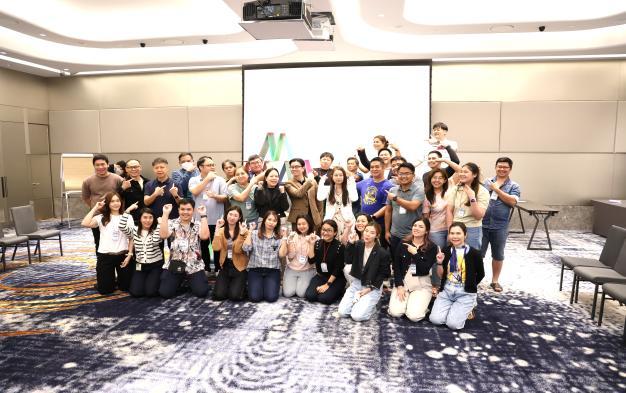
In January 2025, the company organized an off-site New Year's celebration for employees and executives at all levels. The event featured numerous activities for employees to enjoy, such as Team Building, prize draws, and a singing competition for prizes.
In February 2025, the company organized activities for the Office department, including "Buddy Activities" to help create a positive atmosphere within the office.
In March and August 2025 Organizing events Town Hall Meeting as a channel Communicate operational directions, key policies, and past performance of the company, while providing opportunities for employees to ask questions,express opinions, and exchange perspectives to foster mutual understanding and reinforce a transparent work culture.
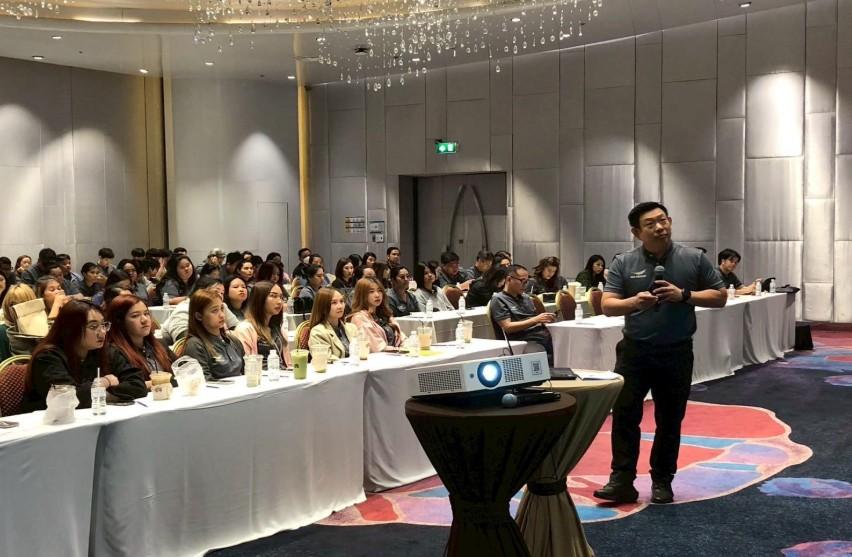
In April 2025, the company organized activities for the Sales and Marketing department, focusing on creating Sales Passion.
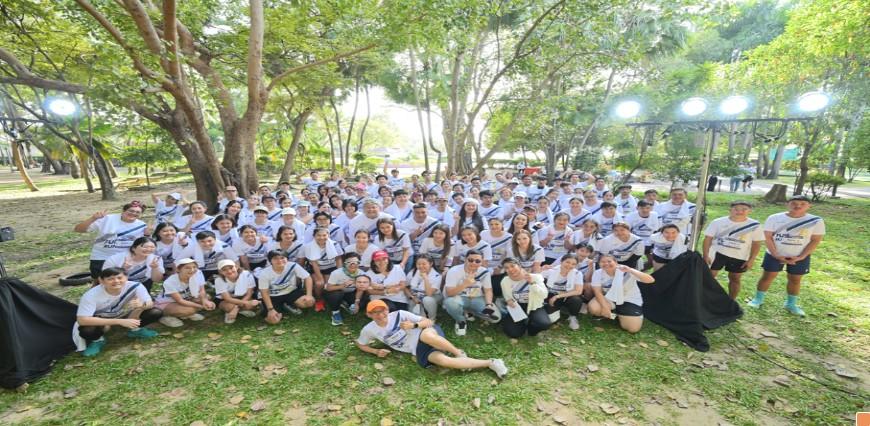
In November 2025, the company organized the BIS FUN RUN 2025, an internal Fun Run competition for prize money, reducing the gap between the Sales and Marketing office and senior management. This created an
atmosphere filled with energy, unity, and enjoyment for employees and executives.
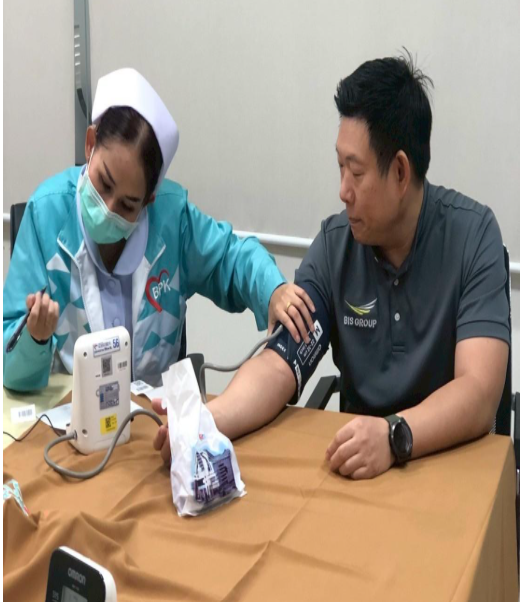
With respect to employee welfare and compensation, the Company has established a fair remuneration policy, as well as promotes career stability and provides equal opportunities for career advancement. The Company also provides various employee benefits in compliance with applicable laws, such as the Social Security Fund, Provident Fund, and annual health check-ups at the office free of charge. In addition, the Company offers group insurance (including life, accident, and health insurance), dental benefits, marriage grants, funeral assistance, ordination support, uniforms, interest-free loans, annual salary adjustments, and annual bonuses based on the Company’s performance, among others.
Employee Training
The company promotes personnel development by organizing training sessions, seminars, and workshops, as well as sending personnel to attend relevant academic seminars and training in various fields to enhance their knowledge, abilities, and potential. This includes both internal and external courses, along with welfare benefits for English language tuition and educational qualification adjustments for employees.
In 2025, the company organized employee training courses to enhance employees' skills and work potential. The average number of training hours or knowledge development activities per employee per year was 8 hours.
Safety, Occupational Health, and Work Environment
The company prioritizes the safety and occupational health of its employees, focusing on fostering a safety consciousness to prevent and reduce the risk of accidents that may occur during operations. This includes promoting employee knowledge and understanding, and encouraging them to avoid any actions that could affect the health and well-being of customers, service recipients, and relevant stakeholders. The company regularly assesses safety risks and organizes activities to build safety awareness, such as safety training, drills, basic firefighting, and basic first aid.
Furthermore, the company prioritizes maintaining a hygienic, clean, and safe workplace at all times to effectively reduce accident statistics, absenteeism rates, and work-related illness rates. This is coupled with fostering a work environment that respects employee diversity (Diversity Workforce), aiming to create a workplace conducive to the happiness, safety, and good quality of life for all employees.
In 2025, the company provided a workplace with good environmental and occupational health conditions, and ensured appropriate safety measures for employees' lives and property to reduce the risk of illness, injury, or death, and to properly care for employees' quality of life. In 2025, no work-related injuries resulting in lost time were reported.
Customers — Plan & Guidelines
Has a Customer Management Plan
Yes
Plan Description
The Company and its subsidiaries are committed to developing products and services for the utmost satisfaction and benefit of customers, and adhere to treating customers with responsibility, integrity, and care. The Company and its subsidiaries prioritize the quality and standards of products and production efficiency. Furthermore, they focus on producing safe products that meet international standards, as well as developing service systems to ensure customers consume quality products, receive quality services, and achieve maximum satisfaction.
Plan Areas
| Plan Area |
|---|
| Responsible production and services for customers |
| Development of customer satisfaction and customer relationship |
| Protection of customer personal information |
Customers — Satisfaction Results
Customer Satisfaction Results
| Metric | Current Year | Previous Year | Two Years Ago |
|---|---|---|---|
| Evaluation results of customer satisfaction | 1 | 1 | 1 |
Customers — Targets
Has Set Customer Targets
No
Customers — Performance & Outcomes
Has Performance Results
Yes
Performance Description
In 2025, the company achieved a good level of customer satisfaction and received no significant customer complaints.
Community & Social — Plan & Guidelines
Has a Community & Social Plan
Yes
Plan Description
The Company recognizes the importance of sustainable growth and being an integral part of the community and society, in line with its corporate strategy. For over 20 years, the Company has had a policy to encourage employees, executives, as well as customers and business partners, to participate in giving back and taking responsibility for society and the wider community through continuous activities for the benefit of society and the environment. This has led to various projects and activities aimed at assisting and developing society, beyond the internal operational processes, in diverse areas such as training on wastewater treatment before discharge into public water sources and providing knowledge on preventing animal epidemics.
Plan Areas
| Plan Area | Other — Please Specify |
|---|---|
| Occupational health, safety, health, and quality of life | |
| Water and sanitation management | |
| Others | Providing knowledge on the prevention of animal epidemic diseases |
Community & Social — Targets
Has Set Community & Social Targets
No
Community & Social — Performance & Outcomes
Has Performance Results
Yes
Performance Description
Activities for social and environmental benefit (CSR-After-Process) in 2025.
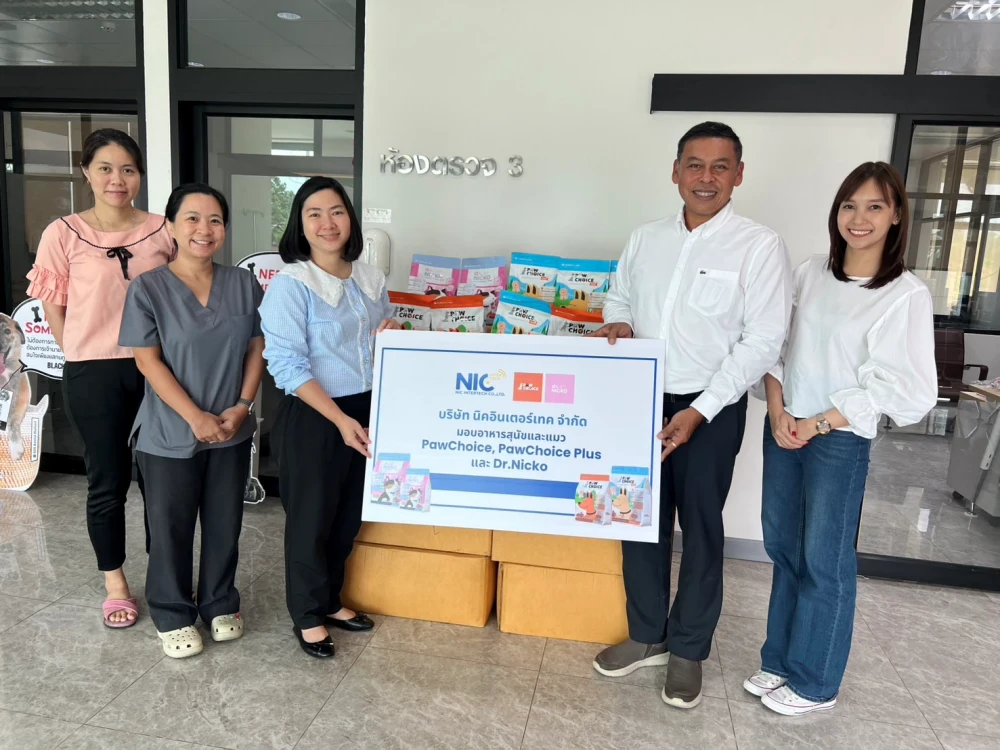
(1) Nik Intertech Co., Ltd., a leader in premium pet food innovation, recognizes the importance of the quality of life for stray animals and animals under government care. The company Participate in the Pawchoice & Dr.Nicko activity dedicated to the care of four-legged companions. Donated dog and cat food to the dog control and shelter group of the Public Veterinary Office, Department of Health, Bangkok Metropolitan Administration.
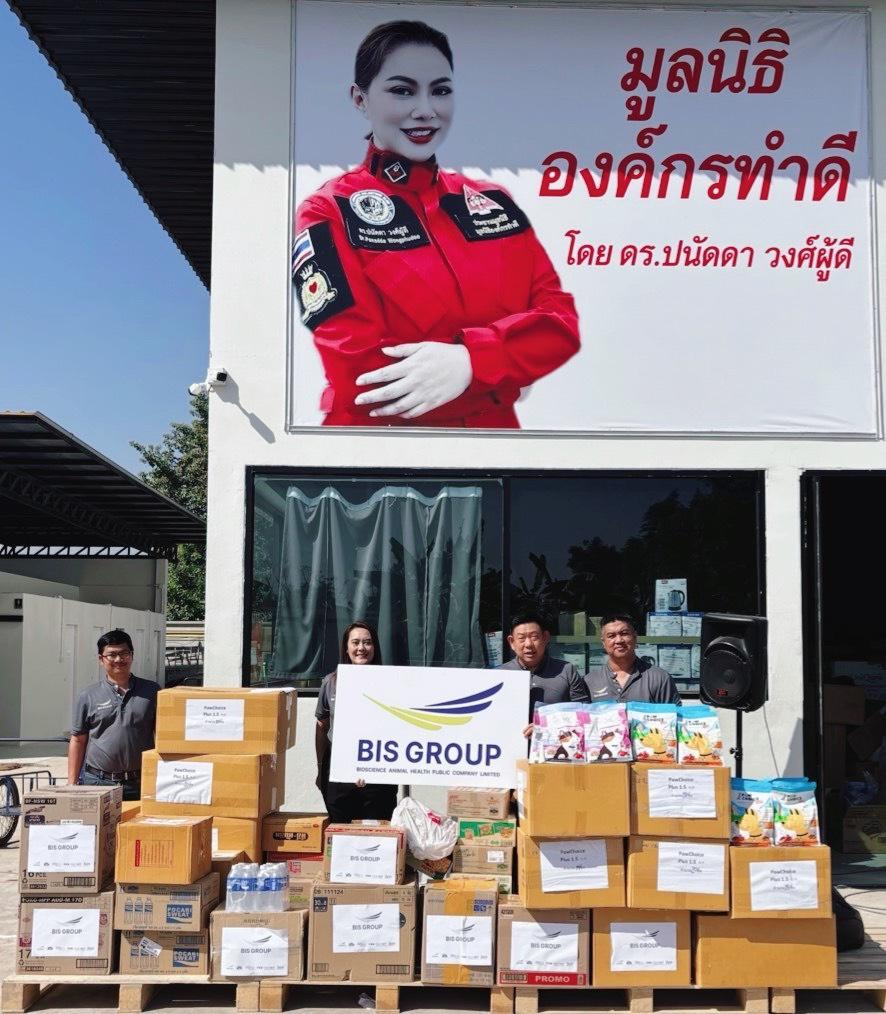
(2) Bioscience Animal Health Public Company Limited and its affiliates jointly donated to assist flood victims. Delivered dog-cat food, pet care equipment, and consumer goods to flood victims in affected areas. through the Thamdee Foundation.
Law Violation Incidents
Law Violation Incidents
| Metric | Current Year | Previous Year | Two Years Ago |
|---|---|---|---|
| The total number of cases or incidents of significant violations of laws or regulations regarding social and human rights (Cases) | 0 | 0 | 0 |
| The total number of cases or incidents that cause significant labor disputes (Cases) | 0 | 0 | 0 |
| The total number of cases or complaints related to consumer rights violations (Cases) | |||
| The total number of cases or complaints related to partner rights violations (Cases) | |||
| The total number of cases or incidents that cause disputes with the community/society (Cases) | |||
| The total number of cases or incidents related to cyber security or customer data breaches (Cases) | |||
| The total number of cases or incidents related to safety and occupational health at work (Cases) |